Divorce Doesn’t Start With Papers
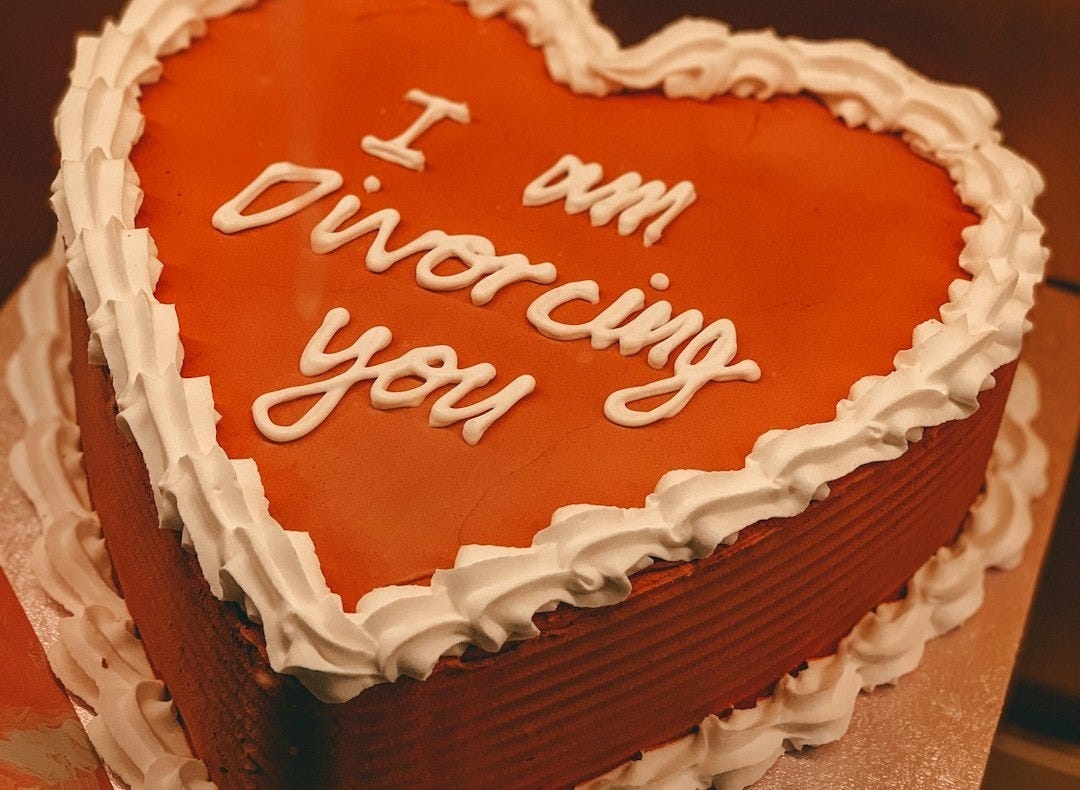
Why many marriages fail long before divorce papers appear. The psychology behind walkaway wife syndrome and partners who refuse relationship work.

Sometimes my best essays start in the comment section of a Substack Note.
Not because of the number of responses. Sometimes one reply is enough. Someone pushes back, adds nuance, or shares a completely different experience, and suddenly the idea gets bigger than the original note.
Where This Essay Came From
A few days ago I posted a couple Notes about something I see constantly in relationships. Men who say they want a good marriage but seem allergic to therapy, allergic to relationship books, allergic to anything that requires looking inward.
The responses were interesting.
One man said he had the opposite experience. In his marriage, it was his wife who refused therapy or any kind of relationship work.
Another man chimed in and said he actually agrees with my point. He’s a coach who primarily works with women, and in his experience men often wait much longer to seek help, if they seek it at all.
A third man said something I hear often. Men simply don’t think this way. They want a clear plan, a logical solution, something practical.
What’s interesting is that the women who agreed with the note didn’t say it publicly. They said it privately. In conversations with clients, friends, and family who recognized the pattern immediately.
This Goes Deeper Than Gender
And to be clear, this is not strictly a man or woman issue.
Anyone can avoid growth. Anyone can be stubborn, defensive, or unwilling to look in the mirror. I’ve seen plenty of women do it too.
But there is another layer to this.
Therapy requires receiving. Listening. Reflecting. Being open to information that challenges how you see yourself.
That’s a receptive process. A feminine one. Not feminine as in female, but feminine as in energy.
When someone is heavily driven by masculine energy, whether they are a man or a woman, that kind of work can feel uncomfortable. Masculine energy prefers solving, fixing, and controlling outcomes. Sitting in reflection and receiving insight requires a different posture.
Which is why this pattern shows up so often.
And therapists even have a name for what tends to happen next.
The Pattern Therapists See
Therapists call it Walkaway Wife Syndrome.
She didn’t leave suddenly. She left slowly, one dismissed request & one eye-roll at therapy at a time, one shrug at a book she left on the nightstand.
By the time the divorce arrived, she had already grieved you.
Quietly.
Privately.
In a therapist’s office you were too proud to set foot in.
You just didn’t notice. Because you weren’t paying attention or too full of excuses to do the work.
And when it was finally, officially over, you said you were blindsided or play victim blaming her fore giving up. .
You weren’t blindsided. You just didn’t care enough to stop taking her and the relationship for granted.
How the Pattern Actually Starts
She starts asking for change. Gently at first, invitations, not ultimatums. Therapy. A couples retreat. A book. A conversation that goes deeper than logistics.
The response is always predictable.
“Therapy is for crazy people.”
“I don’t need some stranger in my business.”
“We can figure it out ourselves.”
“You’re overthinking.”
“Therapy doesn’t work”
Meanwhile, the same man who has no time for a 50-minute therapy session (online) can somehow recite every fantasy football trade from the last three seasons. He’s watched every episode of every prestige drama on every streaming platform. He’ll drop thousands on a vacation, a golf trip, sneakers, or cars without blinking.
But a couples intensive that compresses seven months of work into one weekend? Suddenly the budget disappears.
It was never about time. It was never about money.
It was about priority. And he chose everything else but the relationship.
When One Person Starts Doing the Work
So she goes to therapy alone.
At first she goes to fix the marriage. She reads the books. Listens to the podcasts. She learns about attachment styles, communication patterns, the invisible ways that childhood wounds show up in adult relationships. She starts doing the uncomfortable work of looking at herself honestly.
And then something happens.
She grows.
Growth has consequences. The more she understands herself, the harder it becomes to pretend a broken dynamic is normal.
She starts noticing patterns she used to ignore. Setting limits she used to avoid. Tolerating less of what she used to absorb in silence.
And quietly, not out of cruelty, but out of clarity, she emotionally detaches.
Change Starts With Yourself
Here’s the part most people misunderstand about change in relationships.
You cannot change or control another person. You cannot force someone to grow before they are ready. You can have the illusion of such, but it’s not reality.
The only place real change starts is with yourself.
I’m not a couples coach. I don’t sit in the middle of two people trying to referee a marriage. But my clients talk about their relationships constantly, because relationships reveal everything about us.
They reveal our fears. Our defenses. Our patterns.
And the philosophy I come back to again and again is simple.
Start with yourself.
When someone begins doing real inner work, things shift. When you invest in your own growth, your own emotional awareness, your own health, into your own future…you start showing up to every area of life differently.
Including your marriage.
When you start investing in yourself properly, you start showing up to your marriage differently.
Sometimes that work transforms the relationship. Two people begin growing together and join forces. Communication improves. The connection deepens.
And sometimes something else happens.
The person doing the work realizes they have been settling for far less than they deserve for way too long.
Either way, the work changes things.
Because growth always changes the environment around it.
What Divorce Looks Like From the Inside
The woman who once begged for change starts building a life that doesn’t revolve around waiting for someone else to show up.
When the papers finally arrive, he experiences it as sudden.
From the outside, it looks like a shocking decision.
From the inside, it was a slow realization years in the making.
Longevity Isn’t the Same as Happiness
I have a friend who has been married for 23 years. Unhappy for 22 of them. Yes, the entire marriage.
Five years ago, he told me he was staying until the kids turned 18. They can now both legally drink. He’s still there. Still miserable. Still cohabitating with a woman he calls his roommate and has sex with every few weeks out of familiarity & comfort.
Neither of them in therapy, both of them just... stuck. Spinning in place and calling it a life. I finally told him during one of his vent sessions to fix it or get out, but for the love of God, stop talking about it!!!
And here’s something else. I was 27 years in when I got divorced & people were genuinely shocked. Because we were good at the front, smiling in the right places, performing at Oscar level.
A lot of couples are excellent at the performance. Staying isn’t the same as showing up.
The numbers tell a similar story. In the United States, roughly 50% of first marriages end in divorce. For second marriages, the number climbs to around 60%, and third marriages fail nearly 70% of the time.
At the same time, gray divorce is rising fast. Since the 1990s, divorce among adults over 50 has more than doubled, and for people over 65 it has nearly tripled.
In other words, longevity doesn’t automatically equal fulfillment. Sometimes it just means people stayed.
What Real Power Couples Actually Do
Real power couples? You know them when you’re around them. Not because they announce it or brag You feel it. There’s no tension leaking through the jokes, no bitterness dressed up as sarcasm, no one keeping score behind a smile. They’re not drama-free because life is easy.
They’re drama-free because they’ve done the work to handle it together and they understand that love is a verb and relationships take intention. They chose each other, repeatedly every day, even when it was inconvenient.
They treat their relationship with respect and top priority. They have the weekly meetings, the hard conversations, they make the repairs and they use coaches & therapists as needed to sustain such a precious gift.
That’s not luck. That’s effort. That’s two people who decided the relationship was worth investing in and they both put the other first.
The Choice Most People Avoid
Here’s the part I want you to actually hear.
Some marriages can be saved. But only when both people are willing to grow.
I have seen men wake up. Men who walked into a therapist’s office for the first time at 47 and learned things about themselves they should have known at 25. Some of them saved their marriages. Some didn’t, but they became someone worth loving in the next chapter. The work is not weakness. Understanding your attachment style, relearning some of the things you learned in childhood, learning how to repair, knowing how to actually hear someone…that’s not soft. That’s the most useful thing you will ever do for yourself, your partner, your kids and generations to come.
But only if you’re willing.
For those who would rather lose the marriage than look in the mirror, here is the truth you were never told…both paths are hard.
She didn’t leave you.
She left who you refused to become.
And she stopped waiting a long time ago.
You just weren’t paying attention.
What Happens Next Is Your Choice
If this made you uncomfortable, good. Discomfort usually means you recognized something.
If you’re the one who’s been asking for change and feeling invisible, you’re not crazy and you’re not alone. And if you know deep down you’ve been avoiding the work, there’s still time to change the story.
If you’re ready to start doing the work for real, you can book a Self-Mastery Audit with Jen’s Life Coaching. It’s a one-on-one conversation where we look honestly at where you are, what patterns may be showing up in your relationships, and what it would take to change them.
If you’d rather start privately, you can also purchase my book on Amazon, which walks through many of the same principles of self-awareness and personal responsibility that shape healthier relationships.
Either way, the work starts with you.
Until next time, Jen
What’s striking is how often the real breakup happens years before the divorce papers. One person is still arguing about the problem while the other has already finished grieving the relationship.
Most “sudden” divorces are only sudden to the person who wasn’t paying attention.
One line that really stood out to me was “she didn’t leave suddenly, she left slowly.”
From the outside those moments often look abrupt. But in many long relationships there is a quiet maintenance system running in the background for years. The remembering, the anticipating, the emotional buffering that keeps tension from escalating.
When one partner has been carrying most of that maintenance, the relationship can appear stable for a very long time.
What looks like a sudden walkaway is often the moment that invisible maintenance finally stops.
From the outside it feels shocking. From the inside it has usually been building for years.